
Memorabilia and keepsakes can quickly pile up in closets, basements, and storage bins. If you feel overwhelmed trying to decide what to keep, this guide will help you organize sentimental items into simple, meaningful systems that are easy to maintain.
Why Organizing Memorabilia Matters
When you take the time to organize keepsakes, you’re creating more than just order. You’re bringing together what matters most: intentional opportunities to reminisce and a meaningful story of your life to pass down to your kids or loved ones
Instead of boxes collecting dust and taking up space, your memories become something you can actually find and enjoy. Think about it as an organized library of someone’s personality. Below are steps I like to think about when downsizing and organizing a memorabilia collection.
Step 1: Organize Memorabilia into Categories
Similar to what I recommend when organizing photos, memorabilia is much easier to manage when it’s grouped into clear categories. The two easiest ways to organize keepsakes are by timeline (year, school year, age) or by theme.
If you’re sorting through large amounts of memorabilia, grab a stack of sticky notes and a pen before you begin. As you come across common themes, create a sticky note category and begin grouping similar items together. For example, if you played sports throughout childhood, create a “Sports” category. If you find piles of birthday cards, school awards, or travel souvenirs, separate those into their own groups as well.
At this stage, you do not need to make final decisions about what to keep or toss. The goal is simply to sort and create structure. However, if you come across obvious trash, duplicates, or items that no longer hold meaning, feel free to recycle or let them go as you work.
Popular Memory Box Categories
Many clients find these categories helpful when organizing keepsakes and sentimental items:
- About Me
- Artwork
- Awards & Achievements
- Childhood
- Events
- Letters & Cards
- School & Academic
- Sports & Activities
- Travel & Adventures
You can also organize memorabilia by school year or life stage, which is especially helpful for children’s keepsakes.
How to Organize Kids' Keepsakes by Age or School Year
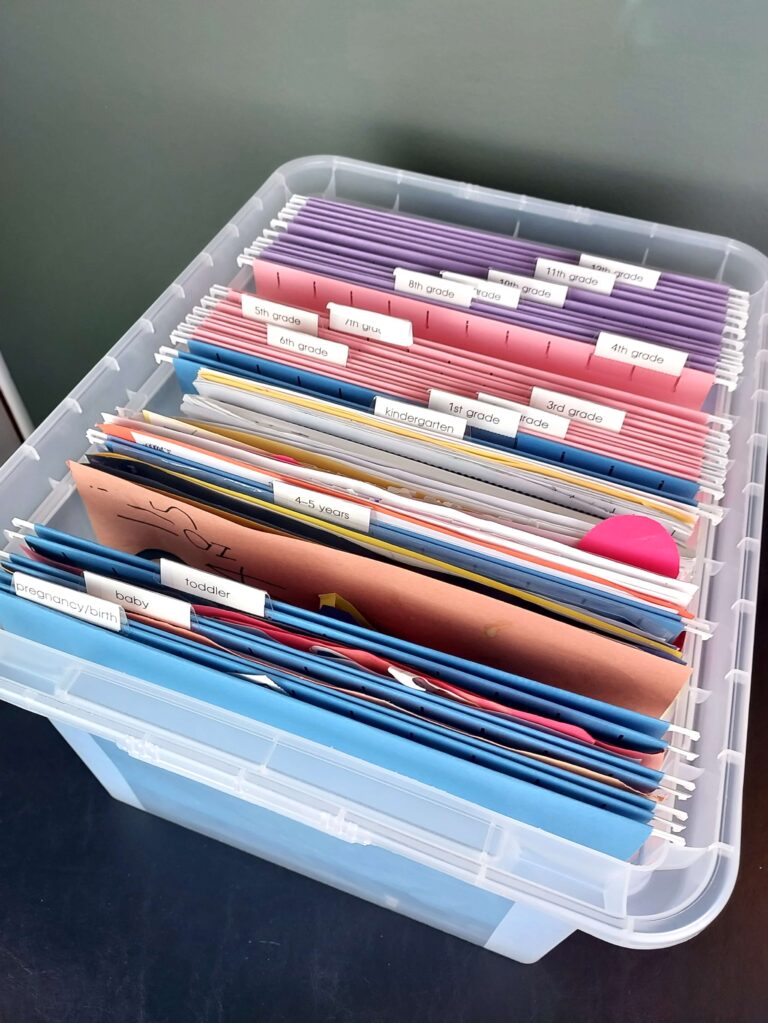
For children, I often recommend grouping memories by age and school year. This makes it easier to save meaningful items in real time rather than facing an overwhelming pile years later.
A simple structure might look like:
- Pregnancy & Birth
- Baby
- Toddler
- Preschool
- Kindergarten
- Etc.
This system gives you an easy place to tuck away favorites as your child grows. The beauty of organizing this way is that it can always be edited later. In the future, your child may prefer to reorganize their keepsakes by category instead of age—and that’s completely fine.
One small detail that makes a big difference: I like writing the teacher’s name and school on each folder as well. These little details are often forgotten over time, but they help bring the memories and stories back to life years later.
When memorabilia is organized intentionally, it becomes much easier to revisit, enjoy, and preserve the moments that truly matter—without sacrificing valuable space.
Step 2: Choose the Best Keepsake Storage System
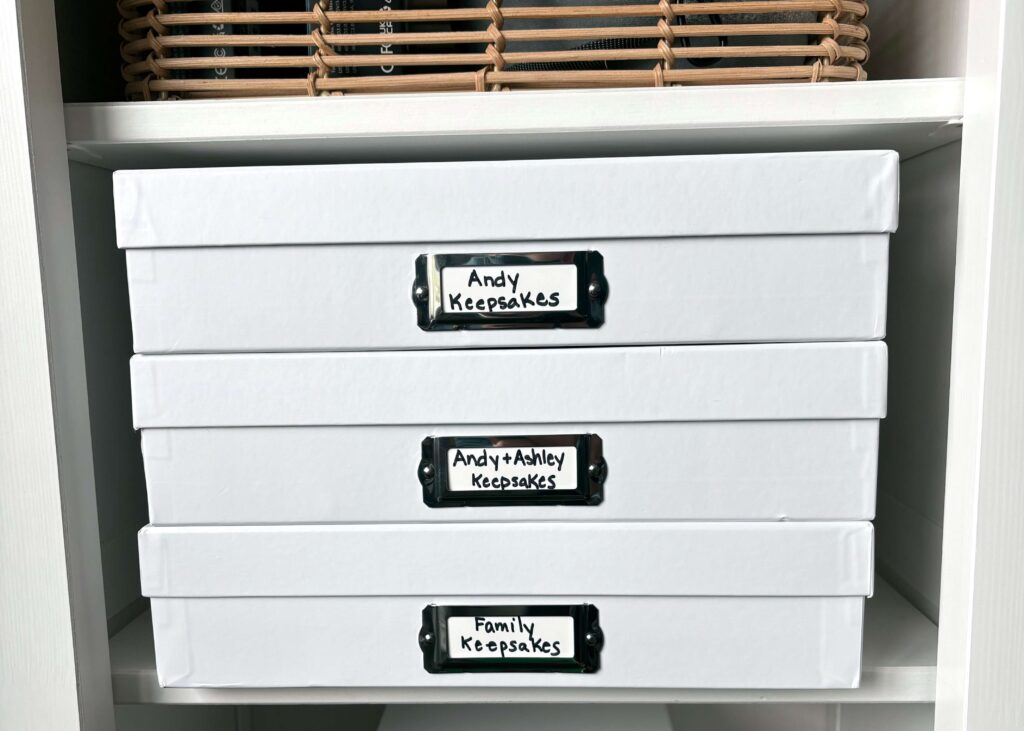
One of the best ways to manage keepsakes is by setting a physical boundary. For most people, 1–2 bins is plenty of space to preserve their most meaningful memories.
I recommend using plastic file totes with hanging file folders for flat, 2-D items like artwork, school papers, cards, and letters. The folders hold your categories and make it easy to flip through memories.
Plastic file boxes are durable, stackable, protective against damage, and offer some water resistance. Most importantly, they create a simple system that makes your memories easy to access and enjoy.
For oversized or 3-D items, a separate storage bin may also be helpful—but be selective.
How to Preserve Precious Heirlooms
For especially precious heirlooms, you may want to invest in archival-quality folders and envelopes to provide extra protection. I recommend Archival Methods. However, wait to purchase these materials until after you’ve sorted through your collection and know exactly what—and how much—you truly need.
Step 3: Declutter Sentimental Items by Focusing on Emotion
When deciding what to keep, shift your mindset. Ask yourself:
- Does my heart flutter with joy when I find a heartfelt letter?
- Does this represent a big accomplishment?
- Does it make me laugh or want to tell a story?
- Would I want to share this part of me with someone I love?
If an item makes your eyes glaze over or you feel neutral about it, it’s likely not worth keeping. This approach helps declutter sentimental items without the guilt.
Step 4: Be Intentional About Kids’ Keepsakes
Parents—this one is important. Much of what we save for our kids is actually for us, not them.
Young kids often don’t remember many early moments. And when they’re eventually handed boxes of memories, it becomes their responsibility to sort through them all.
It’s okay to be selective. Or if it is more important to you than it is your grown kids, keep it with your own memories.
Step 5: Separate and Protect Photos
Photos deserve special attention. Keep them all together in one designated space, or in a clearly labeled “Oversized Photos” folder.
For extra protection, consider scanning your most meaningful photos. Digitizing gives you a backup and opens the door to creating photo books—so your memories don’t just sit in a box.
Final Thoughts on Organizing Keepsakes
At the end of the day, organizing memorabilia isn’t about getting rid of your past—it’s about making space for what matters most. When you simplify your keepsakes, you create room for breathing, clarity, and the ability to truly enjoy your memories.
Feeling overwhelmed by bins of keepsakes and sentimental clutter? I help families throughout Metro Detroit organize memorabilia, preserve meaningful memories, and create simple, easy-to-maintain systems. Schedule a complimentary consultation to get started.
Frequently Asked Questions
This is ultimately up to you, but most people only need 1–2 bins to preserve their most meaningful memories.
Organizing by school year or age is one of the simplest systems to maintain long term.
No. Focus on the items that tell a story or hold emotional significance. Oftentimes, as parents, we’re saving these items more for ourselves than for our kids. If they don’t want everything you’ve saved when they’re older, that’s okay—keep the pieces that matter most in your own memory box or give yourself permission to let them go.
I recommend doing your own research, but I use this flatbed scanner, this sheetfed scanner, and a scan app on my phone (I use Adobe). Most Certified Photo Managers also organize and scan memorabilia. Look for a Photo Manager in your area here.